Choosing a fence
Vinyl vs Aluminum Fence: Which Is Right for Your Yard?
· 2 min read · D2K crew
Comparing vinyl vs aluminum fence options for privacy, wind resistance, pool safety, maintenance, and sloped yards across south-central PA and northern MD.
Privacy and Sightlines
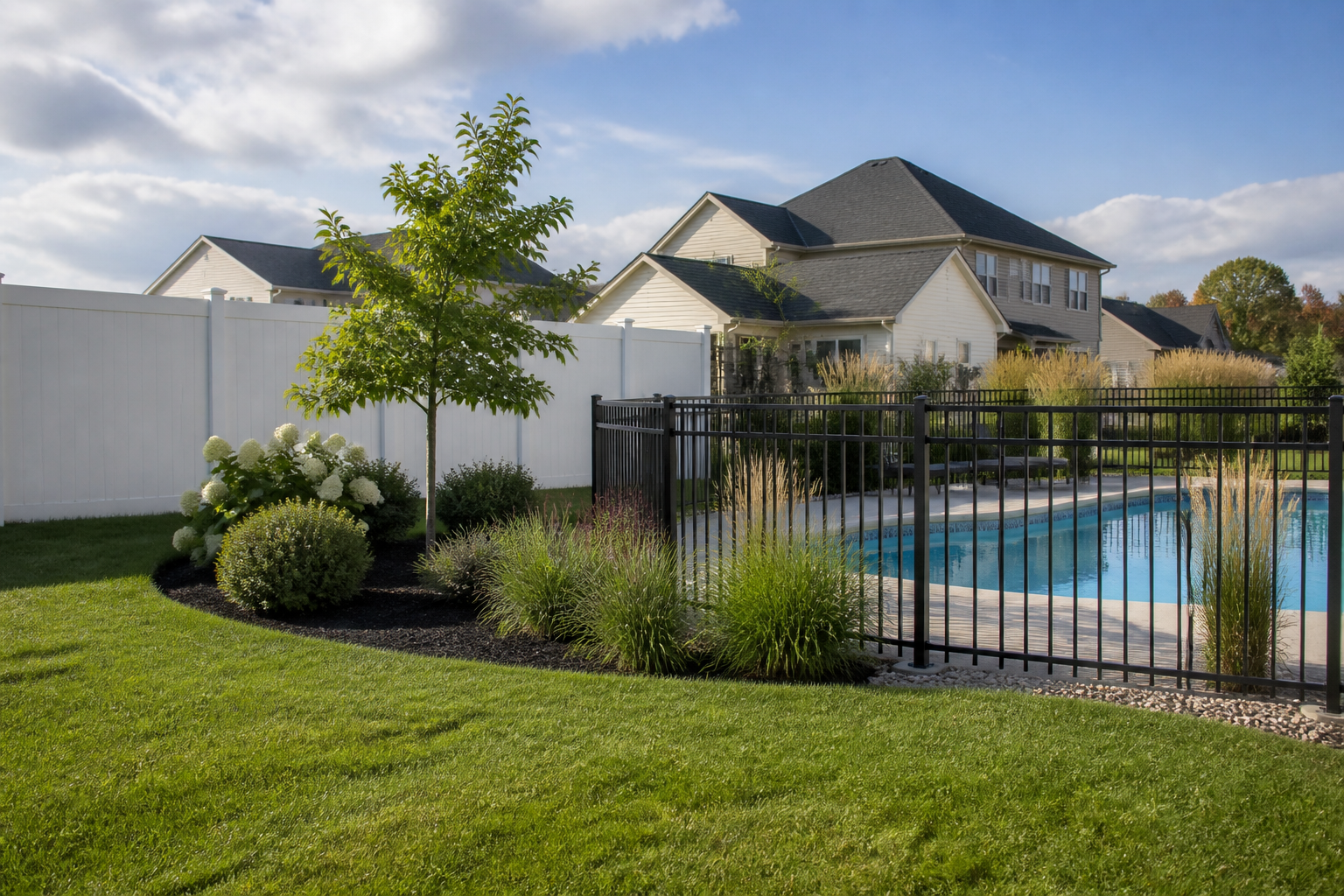
Solid vinyl panel fences block sightlines completely, creating a private backyard space. If you have close neighbors in Hanover or York, or want to keep dogs from barking at passing traffic, solid tongue-and-groove vinyl is the standard choice. Vinyl panels create an uninterrupted solid barrier between your property and the outside world.
Aluminum fences use vertical pickets with open gaps, which preserve open views of woods, fields, or neighboring landscapes. If you want a decorative boundary that lets breezes pass through and keeps your property feeling spacious, aluminum is the better option.
- Vinyl offers full visual privacy with solid tongue-and-groove panels
- Aluminum preserves scenic views while keeping pets and kids contained
- Vinyl prevents dogs from getting distracted by neighborhood activity
Wind Resistance and Sloped Yards
Wind load behaves differently against solid versus open fence styles. Solid vinyl panels act like sails in high winds across open hills in Gettysburg or Westminster. Proper installation with deep concrete footings keeps vinyl secure, but strong storms place heavy pressure on solid panels. Aluminum fencing features open gaps between pickets, allowing high winds to pass straight through without putting stress on the posts.
For sloped or rolling terrain in places like New Oxford and Hampstead, aluminum fencing racks smoothly to follow natural ground contours. This keeps the bottom rail close to the grass without large gaps. Vinyl panels typically step down on grades, which can leave triangular gaps beneath the fence that small pets might slip under.
- Aluminum allows heavy wind gusts to pass through safely
- Aluminum racks easily to match natural ground slopes
- Vinyl uses a stepped design on steep grade changes
Pool Safety, HOAs, and Local Rules
Both vinyl and aluminum can meet municipal pool enclosure codes when installed at the required height with self-closing, self-latching gate hardware. Black aluminum is especially popular around residential pools in Littlestown and East Berlin because it meets safety codes without blocking sightlines from your patio or deck.
Homeowners association guidelines vary across residential developments. Many HOAs prefer black aluminum because of its narrow profile and traditional look. Other communities permit white or tan vinyl privacy fencing in backyards but restrict its use in front yards. Checking your specific HOA covenants before selecting a material avoids approval delays.
- Both options can satisfy local pool safety barrier codes
- Black aluminum offers clear sightlines into pool areas for supervision
- HOAs frequently mandate specific material, color, and height choices
Maintenance and Long-Term Durability
Neither vinyl nor aluminum will rot, warp, split, or suffer insect damage like traditional wood. Vinyl requires periodic cleaning with mild soap and water or a gentle soft wash to clear off dirt, pollen, and green algae that collect in shaded areas. Powder-coated aluminum requires almost no routine washing beyond rinsing off soil with a hose.
In terms of physical impact, high-grade aluminum handles bumps from lawn equipment without cracking. Vinyl is durable and weather-resistant, though extreme cold temperatures can make vinyl panels somewhat more brittle under heavy direct impacts. Both materials offer decades of low-maintenance service without needing paint or stain.
- Neither material requires painting, staining, or sealing
- Vinyl cleans quickly with water and mild household soap
- Powder-coated aluminum resists chipping, rusting, and physical impacts
Want a price for your own yard?
Draw your fence line on a satellite view of your property and see a preliminary price in a few minutes.