
Landscaping
Best Privacy Screening Plants and Hedges for PA Yards
· 4 min read · D2K crew
Learn how to choose, space, and plant living privacy screens and evergreen hedges that withstand heavy clay soil and deer in York and Adams County.
Planning a Living Privacy Screen in South Central PA
A natural privacy screen softens property lines, blocks wind, and dampens neighborhood noise without making your yard feel boxed in. In Hanover, York, and Adams County, successful screening comes down to selecting plants that handle local conditions: dense clay soil, humid summers, and heavy deer browsing. Rushing out to buy whatever looks green at a big-box store often leads to dead roots, sparse growth, or trees stripped bare by wildlife.
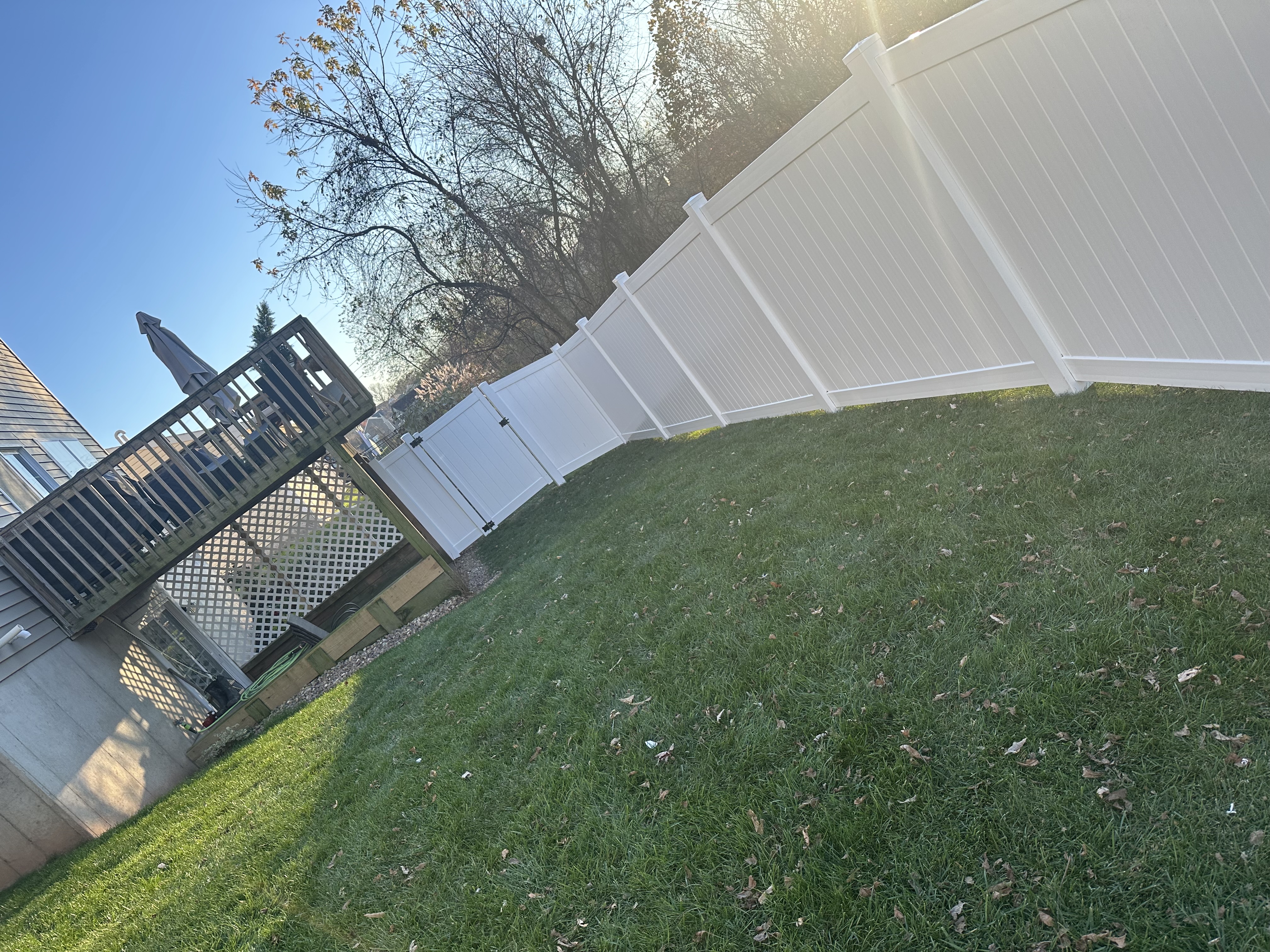
Before digging, you need to assess sunlight patterns, soil moisture, and available space at maturity. A proper screen should provide reliable year-round foliage without outgrowing your property boundary or crowding your outdoor living areas. Pairing strategic plantings with an aluminum fence or a privacy fence for patio seating can create a layered perimeter that looks deliberate and provides instant privacy while the hedge establishes.
- Observe sunlight exposure across morning and late afternoon hours
- Test for drainage issues before choosing root systems sensitive to standing water
- Calculate the mature width of plants so branches stay off property lines
Top Evergreen Trees for Tall Boundary Screening
When homeowners need eight to twenty feet of screening to block a second-story window or a busy road in Gettysburg or York, evergreen trees offer the best vertical coverage. The key is choosing varieties that resist winter burn, tolerate clay, and grow dense enough to stop sightlines through the coldest months.
Green Giant Arborvitae remains a workhorse in our area because it grows rapidly and shows strong resistance to deer compared to traditional American arborvitae. For tighter boundaries where width is limited, Columnar Norway Spruce or American Holly provide upright growth and excellent cold tolerance. If you deal with heavy deer herds in rural Adams County, Skip Laurel and Eastern Redcedar offer hardy, low-maintenance foliage that wildlife typically leaves alone.
- Green Giant Arborvitae for fast-growing, dense vertical barriers
- Columnar Norway Spruce for narrow spaces requiring tall coverage
- Skip Laurel for deer-resistant evergreen foliage up to ten feet tall
Dense Hedges for Mid-Height and Patio Privacy
Not every yard needs a towering wall of trees. If you want to buffer a paver patio, frame a deck, or establish a four-to-six-foot property boundary in New Oxford or Littlestown, compact shrubs and upright hedges are the right choice. These plants give you eye-level privacy when seated outdoors without shading out your lawn or gardens.
Manhattan Euonymus and Hicks Yew both respond well to pruning and hold thick green leaves all winter. If you prefer a softer, flowering perimeter, Korean Spice Viburnum or dense Panicle Hydrangeas provide summer privacy and seasonal blooms, though they drop their leaves in winter. Many homeowners work with a landscaping company Hanover PA relies on to blend evergreens with deciduous flowering shrubs for seasonal interest that still blocks line of sight through summer.
- Hicks Yew for formal, shearable hedges in shaded or partially sunny yards
- Manhattan Euonymus for dark green, upright growth along fence lines
- Deciduous flowering shrubs for lush summer buffers around outdoor living zones
Soil Preparation, Spacing, and Drainage in Clay Soils
The primary reason privacy hedges fail in York and Adams County is poor planting technique in compacted clay. Digging a narrow hole in heavy clay creates a smooth basin that traps water, rotting the root ball during spring rains. Proper installation requires digging planting holes twice as wide as the root ball, roughing up the sides, and keeping the root flare slightly above grade so excess moisture drains away.
Spacing dictates whether your hedge forms a tight screen or chokes itself out. Planting trees too close together causes lower limbs to die off from lack of light, leaving bare trunks right at eye level. Staggering your screen in a zig-zag pattern rather than a single straight line allows each plant room to branch out while closing visual gaps years earlier. Where standing water persists, installing subsurface drainage solutions ensures your hedge roots survive wet seasons.
- Dig holes two to three times wider than the root ball to loosen compacted soil
- Plant the root crown one to two inches above surrounding grade
- Stagger rows rather than crowding plants into a single tight line
Combining Living Screens with Structural Fencing
Living screens take time to reach mature height and thickness. Combining plantings with structural landscape fencing gives you immediate security, pool-code compliance, and wind protection from day one, while the plants soften the look of the perimeter as they mature.
A black aluminum fence set just inside or behind a hedge row provides pet and child containment without obstructing airflow to the plant roots. Around high-traffic patios, pairing a solid vinyl privacy fence on the exposed windward side with layered boxwoods and ornamental grasses in front creates a quiet, secluded retreat that looks like a finished outdoor room.
- Provides immediate containment while hedges mature over several seasons
- Softens fence lines with natural texture, color, and depth
- Prevents neighborhood pets or wildlife from cutting paths through young hedges
Want a price for your own yard?
Draw your fence line on a satellite view of your property and see a preliminary price in a few minutes.