Process
How to Prepare Your Yard for Fence Installation
· 2 min read · D2K crew
Follow this fence installation preparation checklist to ensure your property in Hanover or York is ready for crew arrival and post digging.
Property Lines and Utility Marking
Knowing where your property stops and where underground lines run is the first step when getting ready for a new fence. Locate your property pins early to avoid disputes with neighbors or setting posts on land that is not yours. If your boundary pins are buried or missing, having a land surveyor locate them saves time and headache once installation day arrives.
We handle calling 811 for public utility locates before digging post holes on properties across Hanover, Gettysburg, and York. However, public locate services do not mark private underground lines. You need to identify private lines yourself so augers do not strike hidden hazards.
- Locate corner property pins to verify exact boundaries
- Flag private electric lines running to sheds or outdoor lights
- Inform neighbors about the upcoming fence project timeline
Clearing the Fence Line and Access Route
Fence crews need a clear path to string layout lines, dig post holes, and set fence sections straight. Trim back low-hanging tree branches, thick brush, and overgrown vines along the planned fence line. Clearing a three-foot buffer on both sides of the line gives installers enough working room to move tools and materials cleanly.
Equipment and crews also need an unobstructed path from the driveway to the backyard. Standard crew carts and material haulers require a wide path through existing gates or side yards.
- Cut back heavy brush and weeds along the entire line
- Trim tree branches up to eight feet above the fence path
- Ensure side yard gates offer adequate clearance for equipment
Relocating Furniture, Toys, and Vehicles
Items stored near the work area slow down installation and risk accidental damage while heavy materials are carried across the yard. Move patio sets, grills, children's playsets, lawn ornaments, and garden hoses well away from the perimeter before our trucks pull up.
Parking space is another important consideration. Keep driveways clear of personal vehicles so installation trucks and trailers can park close to the work area. This keeps material handling efficient for homes in places like Westminster and Littlestown.
- Shift patio furniture and grills away from the fence line
- Store dog toys, hoses, and lawn equipment inside a garage or shed
- Park personal vehicles off the driveway to leave room for trucks
Protecting Pets, Sprinklers, and Private Wires
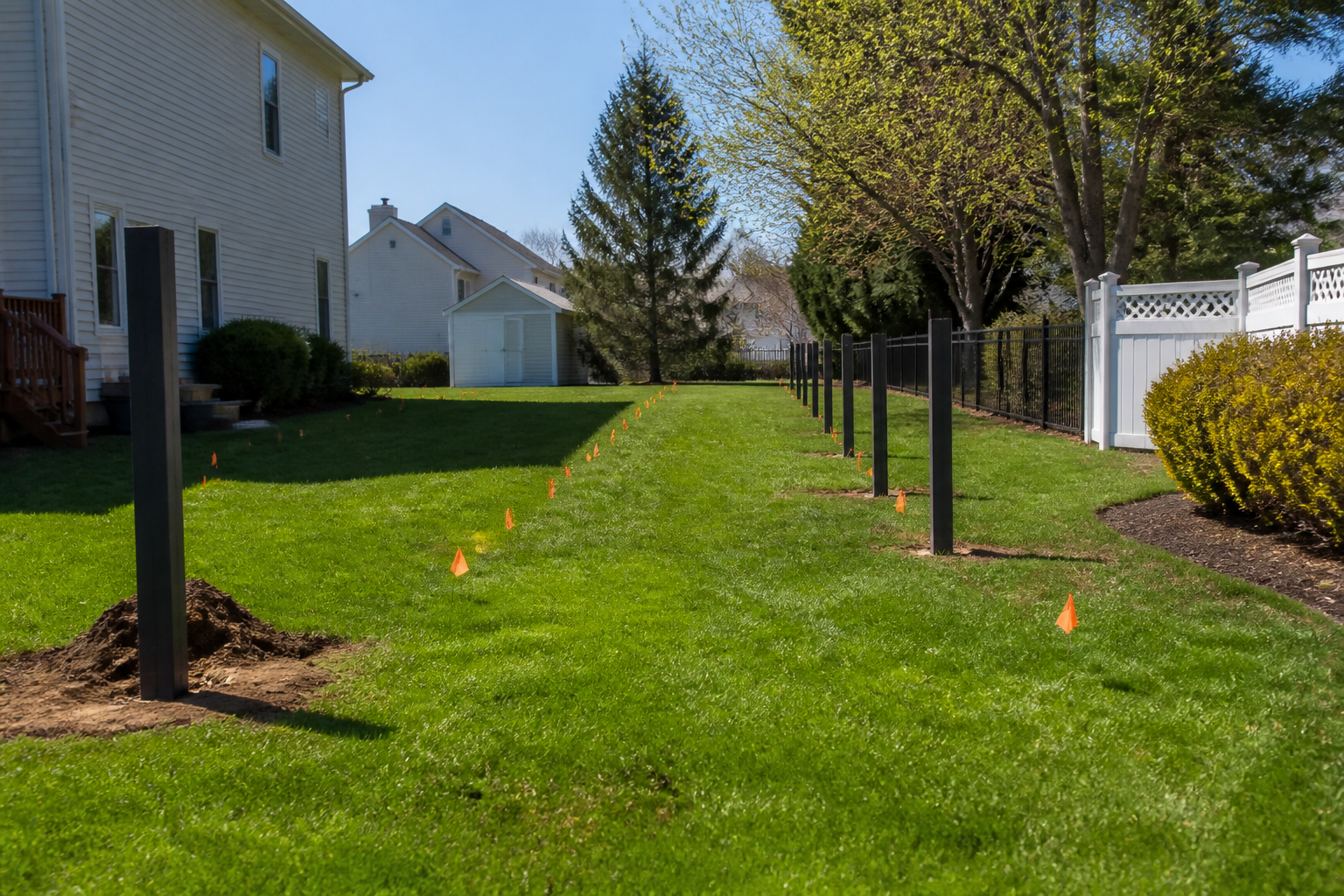
Post diggers go deep into the soil, which poses a risk to shallow buried items. Sprinkler heads, drip lines, and invisible dog fence wires sit only a few inches below the turf. Mark these private lines clearly with yard flags or spray paint so installers know where to dig manually.
Keep dogs and cats inside the house during the entire installation process. Gates will remain open while crew members carry materials back and forth, and heavy equipment can startle animals.
- Flag sprinkler heads and shallow irrigation pipes
- Mark underground invisible pet fence wire loops clearly
- Keep pets strictly indoors or boarded during installation hours
Want a price for your own yard?
Draw your fence line on a satellite view of your property and see a preliminary price in a few minutes.