Planning
How to Choose the Right Fence for Your HOA
· 2 min read · D2K crew
Learn how to navigate HOA fence rules, submit architectural reviews, and select approved materials and heights for your yard in Pennsylvania or Maryland.
Understanding HOA Fence Rules Before You Build
Getting an HOA approved fence requires reading your neighborhood covenants before ordering materials or digging post holes. Homeowners association bylaws dictate what materials you can install, where the structure can go, and how tall it can stand. Skip this step, and you risk paying out of pocket to alter or remove a brand-new installation.
Whether you live in Hanover, York, or Gettysburg, HOA guidelines exist to maintain visual consistency across the community. Working with an experienced contractor who understands these restrictions saves time and keeps your project compliant from day one.
Navigating the Architectural Review Process
Most associations require a formal architectural review submittal before construction starts. This application package provides the board with exact details on what you plan to build, preventing unexpected issues after installation.
Approval timelines vary based on board schedules, often taking between two and four weeks. Submitting complete, accurate details on the first attempt keeps your timeline moving without back-and-forth delays.
- Plot plan showing exact property boundaries and proposed fence location
- Material spec sheets including style, color, and height details
- Contractor license numbers and current certificate of insurance
- Estimated construction start date and expected completion schedule
Approved Fence Materials, Colors, and Styles
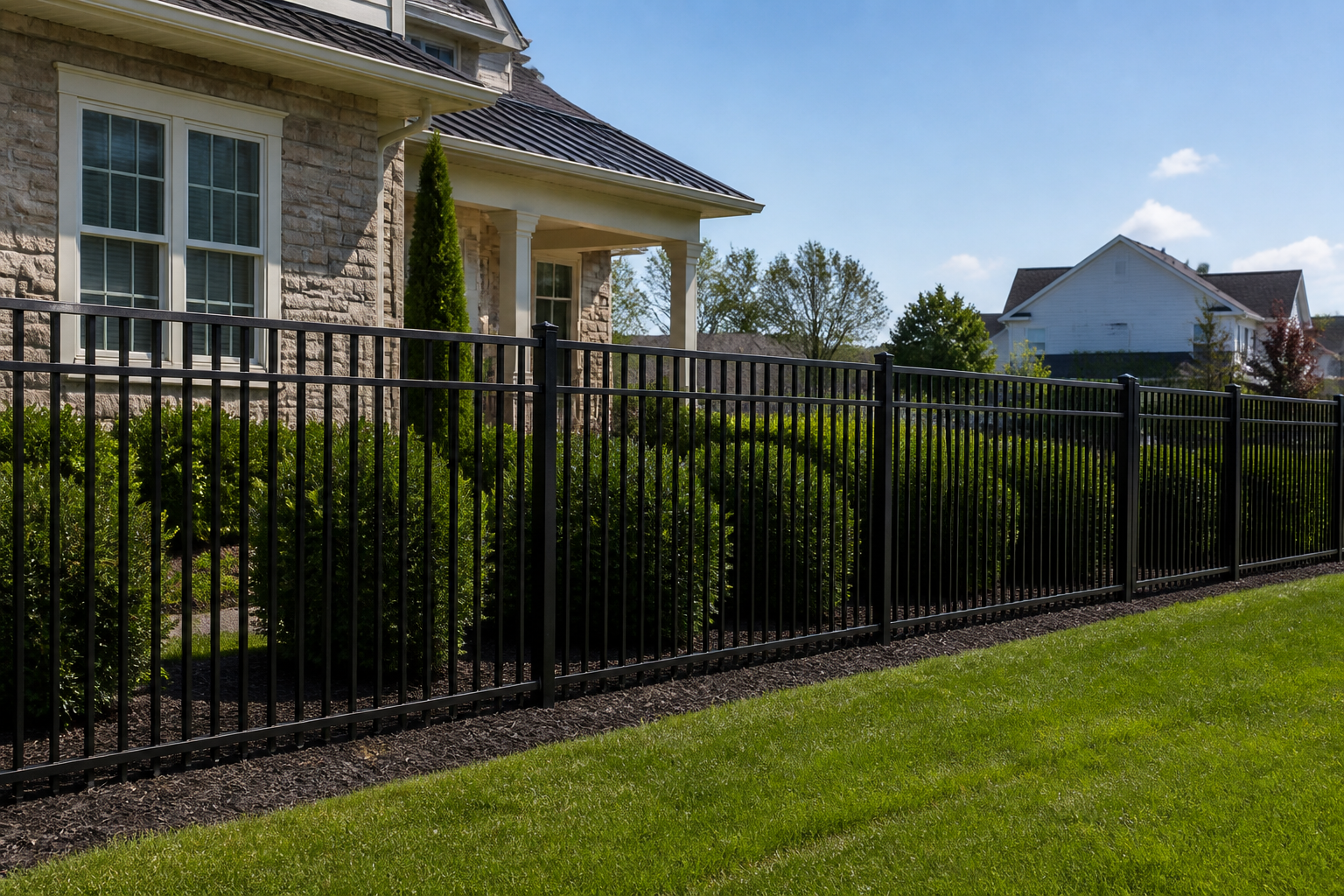
HOA fence rules typically limit allowed materials to match community design standards. White vinyl, tan vinyl, black aluminum, and natural cedar are widely accepted, while chain link is frequently restricted or prohibited in developments around New Oxford and Littlestown.
Color choices are usually restricted to neutral tones that blend with existing neighborhood homes. Matching existing fences installed by neighbors often simplifies board review and speeds up final approval.
Height Limits, Setbacks, and Finished-Side-Out Rules
HOA fence height rules PA developments enforce generally limit backyard privacy fences to six feet, while front or corner lot fences are often restricted to four feet. Property line setbacks dictate how far back the fence must sit from public sidewalks, streets, or adjacent utility easements.
You must also follow the standard finished-side-out rule. Regional covenants require framing, stringers, and structural posts to face inside your yard, leaving the smooth, finished decorative side facing outward toward neighbors and public roads.
- Six-foot maximum height for rear yard privacy structures
- Four-foot maximum height for front yard or side lot lines
- Facing structural posts inward so pickets face outward
- Maintaining required offsets from utility lines and easements
Ensuring Proper Installation and Board Compliance
Once your HOA issues approval, scheduling professional installation keeps the project running on schedule. Experienced installers set posts below frost depth, keep lines straight along surveyed boundaries, and follow every detail approved in your application.
From East Berlin PA to Westminster and Hampstead MD, careful planning ensures your new fence satisfies HOA covenants, municipal codes, and your home privacy goals.
Want a price for your own yard?
Draw your fence line on a satellite view of your property and see a preliminary price in a few minutes.