Planning
HOA Fence Approval Tips: How to Get Your Design Passed Fast
· 3 min read · D2K crew
Learn how to navigate HOA fence rules in PA and MD. Follow these practical tips to prepare your submission and get your board approval without delay.
Start with Your HOA Covenants and Guidelines
Before you pick out fence materials or sign a contract, get a copy of your homeowners association's Covenants, Conditions, and Restrictions, along with the current Architectural Review Committee guidelines. HOA rules vary widely across neighborhoods in Hanover, Gettysburg, and Westminster. Some communities specify exact fence heights, while others restrict style choices to black aluminum or white vinyl privacy fencing. Reading these rules ahead of time prevents you from pitching a fence design that the board will reject immediately.
Pay close attention to specific restrictions on material types, colors, finished sides facing outward, and property line setbacks. If your community requires property line setbacks of two or three feet, that directly impacts your usable yard space and layout.
Gather Required Submission Documents Early
Architectural review boards meet on set schedules, often once a month. Submitting an incomplete application pushes your review back to the next meeting cycle, delaying your installation by weeks. Most boards require a formal application form, a copy of your property plat showing the proposed fence layout, manufacturer spec sheets showing exact heights and styles, and a photo of the chosen fence.
When we build fences in places like York, Littlestown, or Hampstead, we provide detailed plot plans and specification cut sheets specifically tailored for HOA board reviews. Having professionally drawn layout diagrams showing gate placements and post details speeds up board decisions.
- Plot plan highlighting exact proposed fence location and gates
- Manufacturer specification sheets showing fence style, height, and color
- Contractor license and proof of liability insurance
- Written acknowledgment from adjoining neighbors if required by your bylaws
Address Neighbor Impacts and Property Lines
Even if your HOA rules do not explicitly mandate neighbor signatures, talking to your adjoining property owners before submitting your application is sound practice. HOA boards often give neighbors a window to raise concerns regarding view obstruction or property line boundaries. Resolving questions directly with your neighbors prevents unexpected objections during the review meeting.
Verify your property boundary pins before drawing your fence line. If there is any doubt regarding boundary locations in established neighborhoods around East Berlin or New Oxford, a professional property survey eliminates boundary disputes that could trigger an HOA stop-work order later.
Select HOA-Friendly Fence Styles and Colors
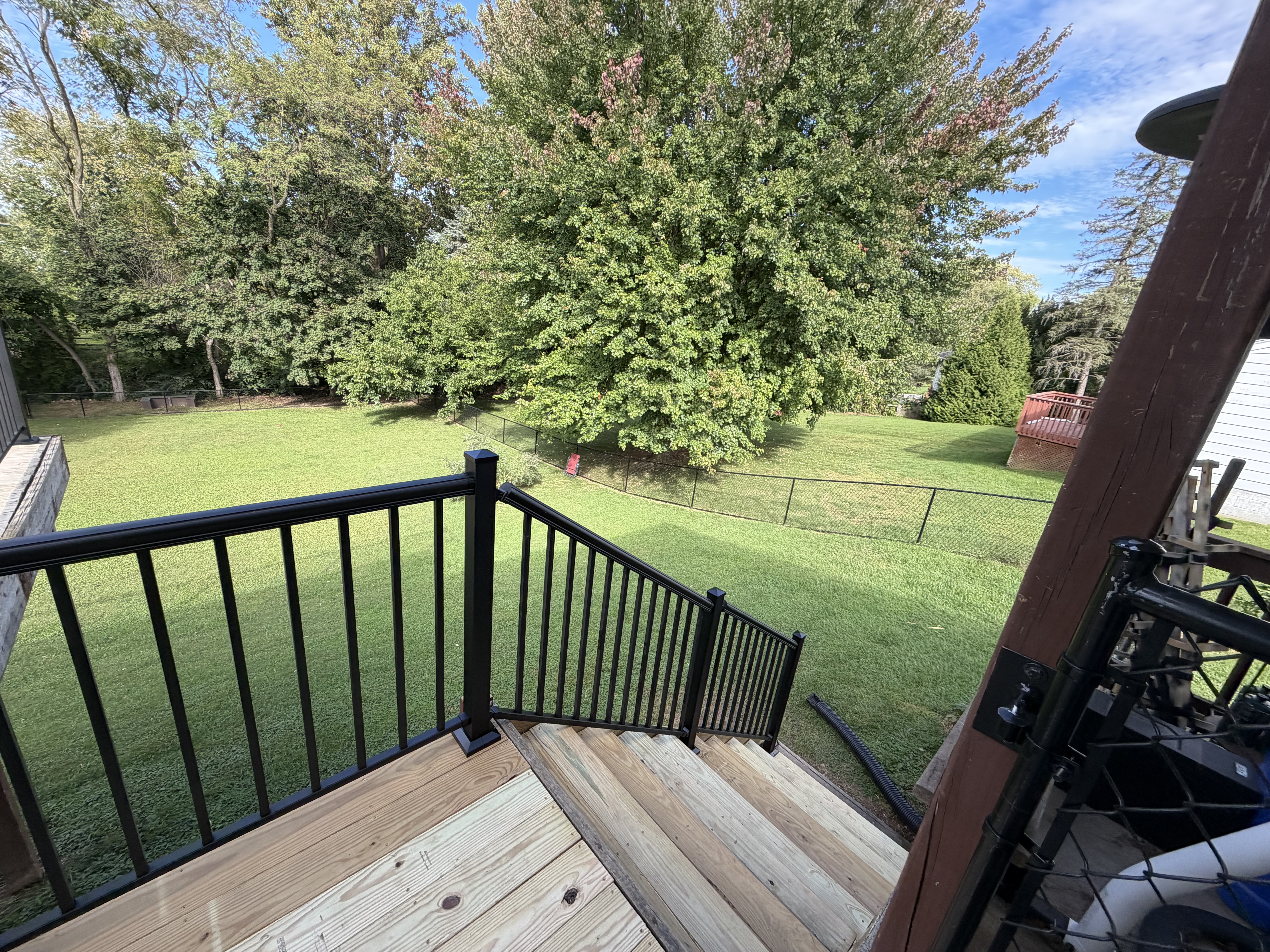
HOA boards generally favor clean, standard styles that match the aesthetic of the neighborhood. Four-foot or five-foot black aluminum picket fencing and six-foot white or tan vinyl privacy fencing are among the most widely accepted options in Central PA and Northern Maryland HOAs. Chain link fencing is frequently restricted or banned entirely in suburban developments.
If your property backs up to open space, common ground, or a stormwater basin, your HOA may require open-picket fencing along the rear boundary to preserve neighborhood sightlines. Be sure to check lot-specific rules before committing to a full privacy perimeter.
- Black aluminum picket fence for open views and drainage easements
- White or neutral vinyl privacy fencing for backyards and pool enclosures
- Custom wood fences with finished side facing outward toward neighbors
Coordinate Installation Timelines with Board Meetings
Timing is everything when planning an HOA fence build. Submit your application at least two weeks before the scheduled board meeting to ensure your packet makes the agenda. Do not schedule material delivery or excavation until you receive formal written approval from the board. Starting work early can result in fines or demands to tear down unapproved structures.
Once your HOA issues approval, verify whether a municipal permit is also required by your local borough or township in Adams, York, or Carroll County. Working with an experienced local contractor ensures both HOA guidelines and municipal codes are met without friction.
Want a price for your own yard?
Draw your fence line on a satellite view of your property and see a preliminary price in a few minutes.