Hardscaping
Composite Deck vs Wood Deck: Which Lasts Longer?
· 3 min read · D2K crew
Choosing between composite decking vs pressure treated wood comes down to long-term durability, annual maintenance, and local freeze-thaw weather performance.
Lifespan and How Materials Handle PA Weather
When homeowners in Hanover, York, and Gettysburg compare composite decking vs pressure treated wood, longevity is usually the primary consideration. Pressure treated pine framing and decking have been the industry standard for decades, but wood is organic. In South Central Pennsylvania and Northern Maryland, high summer humidity followed by winter freeze-thaw cycles forces moisture deep into wood grain. Over time, that moisture expands and contracts, leading to warping, cupping, and split boards.
Modern capped composite decking is engineered to resist water absorption entirely. Because moisture cannot penetrate the outer shell, composite boards do not rot, splinter, or crack when temperatures drop below freezing. A wood deck can stay structurally sound for years if constantly maintained, but composite decking routinely doubles or triples the functional service life of standard pressure treated lumber without deteriorating under harsh regional weather.
- Pressure treated wood is vulnerable to moisture absorption and splintering over time
- Composite materials lock out water to prevent freeze-thaw rot and surface cracks
- Regional humidity requires wood to be repeatedly sealed to slow down organic decay
Annual Maintenance and Care Requirements
The ongoing work required to keep a deck safe and attractive differs significantly between composite vs wood deck projects. Pressure treated lumber requires an initial drying period after installation before it can accept stain or sealant. From there, wood decks demand routine cleaning, sanding, and re-staining every one to three years. Neglecting this maintenance allows UV rays to dry out the wood fiber and rain to soak into the boards.
Composite decking eliminates sanding, scraping, and staining from your weekend schedule. Caring for a composite surface generally involves periodic washing with soft-bristle brushes, mild soap, and water to remove dirt, pollen, or leaf stains. For busy homeowners in Littlestown, Westminster, or East Berlin, avoiding recurring chemical stains and laborious power washing is often the deciding factor in selecting composite materials.
Heat Retention, Barefoot Comfort, and Color Fade
Sun exposure impacts decking materials in distinct ways. Traditional pressure treated wood tends to hold less heat than older generations of synthetic lumber, making it relatively comfortable underfoot during peak July heat. However, untreated or dark-stained wood will dry out under intense direct sunlight, causing pigment fading, surface checking, and splinter hazards for bare feet.
Early composite boards earned a reputation for getting excessively hot in direct sun. Modern composite manufacturers have redesigned board capping with heat-reflecting pigments that reduce surface temperatures substantially. While dark composite boards will still warm up under full sun exposure, quality capped composites handle UV ray exposure without severe color fading or surface breakdown, preserving their initial appearance year after year.
Framing Requirements and Deck Structure
A common misconception is that a composite deck contains no lumber at all. In residential deck building across New Oxford and Hampstead, structural sub-framing, support posts, joists, and ledger boards are almost always constructed using heavy-duty pressure treated lumber. The framing structure must be engineered solidly because composite decking boards are more flexible than traditional wood planks.
Standard wood deck boards are rigid enough to span framing joists spaced 16 inches on center under standard residential loads. While composite decking can also span 16 inches on center for straight runs, diagonal or herringbone patterns require joists set tighter at 12 inches on center. Additionally, proper joist tape application over pressure treated sub-framing helps protect the wood frame underneath, ensuring the structure lasts as long as the composite boards attached to it.
Railings and System Integration
A complete outdoor living space relies on strong, code-compliant railings that complement the main deck surface. Pressure treated wood decks traditionally use wood posts, balusters, and top rails. While wood railings allow for custom paint or stain shades, they require the same intense upkeep as the deck floor, often picking up rot or loose fasteners around post connections.
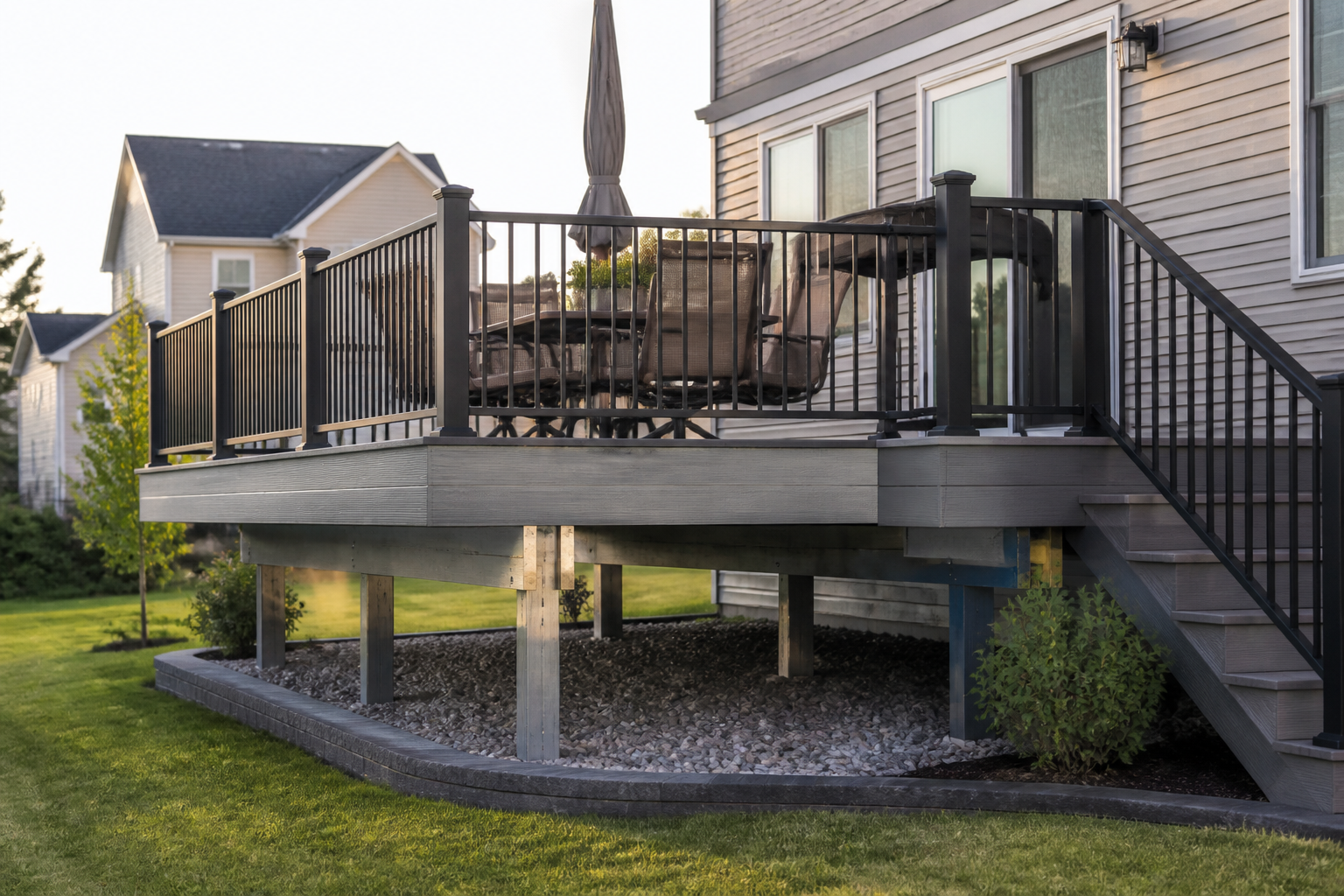
Composite deck builds offer flexible design options by integrating low-maintenance railing systems into the build. Modern setups often combine composite post sleeves with powder-coated aluminum rails, cable infills, or vinyl balusters. Mixing black aluminum spindles with dark composite top rails creates a clean look while maintaining complete weather resistance across the entire outdoor structure.
Want a price for your own yard?
Draw your fence line on a satellite view of your property and see a preliminary price in a few minutes.