Local guides
Chainlink Fencing Guide for PA and MD Homeowners
· 3 min read · D2K crew
Learn how chainlink fencing holds up against South Central PA weather, local zoning codes, and property needs from Hanover to Westminster.
Choosing Chainlink Fencing for Your Property
Chainlink fencing remains one of the most reliable ways to secure a yard, keep pets contained, and define property lines across Hanover and York. Modern galvanized steel holds up well against freezing winter rains and severe summer heat, making it a highly practical choice for property owners who prioritize boundary security and clear visibility over total panel privacy. It provides a clear structure that withstands heavy wind and snow load year after year.
Unlike older industrial wire fences, residential chainlink fencing comes in options that blend into the surrounding landscape. Choosing the right mesh size, wire gauge, and framework diameter ensures the structure stays rigid through ice storms and heavy wind season in South Central Pennsylvania. We always ensure that post depth goes well below the local frost line to prevent shifting over time.
Galvanized vs Vinyl Coated Chainlink
Traditional galvanized chainlink is hot-dipped in zinc to prevent rust, giving it a bright metallic look. While standard galvanized works well for larger agricultural lots or utility enclosures in Gettysburg and New Oxford, many homeowners prefer black or green vinyl-coated fencing for residential yards. The protective coating provides additional weather defense against moisture and humidity. It holds up remarkably well against lawn equipment and foot traffic.
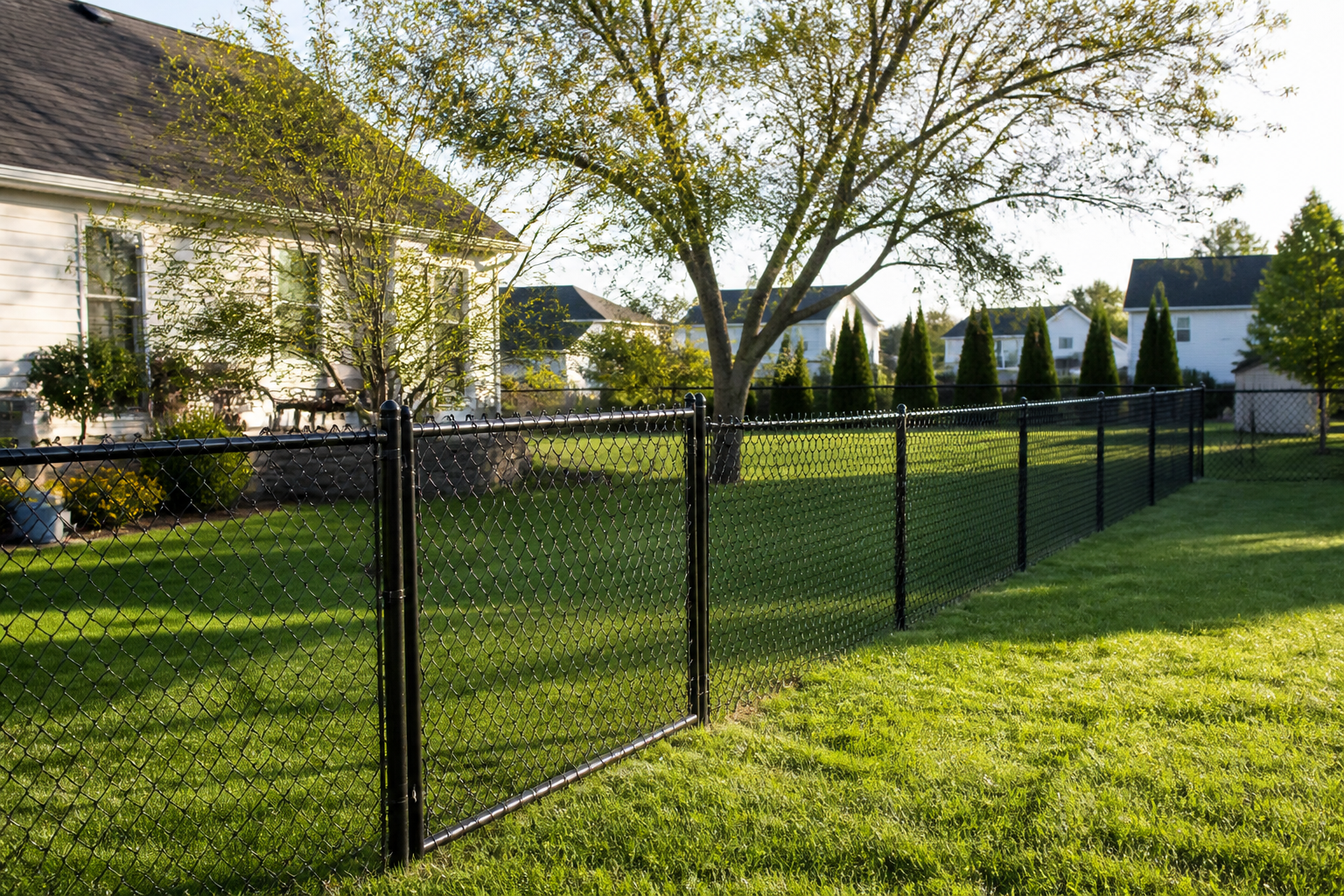
The vinyl coating adds a thick protective layer over the heavy-gauge steel core, extending the overall life of the fence while softening its visual impact. Black vinyl coating in particular tends to visually recede into shadows and trees, keeping your property open without looking like a commercial lot. It combines clean aesthetics with long-lasting structural strength. This makes it a popular choice in established residential developments.
- Black vinyl blends seamlessly with wooded backyards
- Galvanized coating offers durable rust protection
- High-gauge inner steel prevents sagging over time
- Green coating matches lawn foliage in suburban lots
Local Zoning and Property Line Considerations
Installing chainlink fencing in places like Littlestown, East Berlin, or down into Westminster and Hampstead requires attention to local municipality rules. Most townships have specific setback requirements from property lines, height limits for front versus back yards, and required permit procedures before construction begins. Skipping these local regulations can lead to costly repositioning later. Understanding your local township codes keeps the project running smoothly.
Marking underground utility lines is essential before digging post holes below the frost line in our region. Properly setting corner and terminal posts in solid concrete prevents frost heave from pushing your fence out of alignment during harsh Pennsylvania winters. Tension bars and top rails must also be drawn tight to ensure the fence wire does not sag over time. A tight installation keeps your property clean and secure.
Maintenance and Long-Term Performance
Chainlink fencing demands very little routine upkeep compared to wood, but keeping vegetation off the bottom wire preserves structural tension. Trimming heavy vines and avoiding piling firewood or heavy soil against the mesh prevents the wire from stretching out of shape. Clearing dead leaves and debris from the base of the posts also reduces moisture buildup. Taking simple precautions prevents structural wear over the long haul.
Periodically inspecting top rails, rail caps, and gate hardware keeps everything operating smoothly throughout every season. If a fallen tree branch damages a section during a storm, individual top rails or woven wire sections can usually be spliced and repaired without tearing down the entire fence line. That makes chainlink one of the most adaptable fencing materials available. Routine maintenance ensures decades of trouble-free security.
- Keep heavy brush trimmed clear of lower tension wire
- Check gate latches and hinges annually for alignment
- Clear snow piles away from bottom fence ties
- Inspect corner posts after severe winter storms
Want a price for your own yard?
Draw your fence line on a satellite view of your property and see a preliminary price in a few minutes.