
Choosing a fence
Chain Link Fence for Dogs & Backyards: Practical Guide
· 4 min read · D2K crew
Learn how to choose wire gauge, height, and bottom tension wires for a secure, dog-safe chain link fence in your backyard.
Selecting the Right Wire Gauge and Mesh Size for Dogs
When selecting a chain link fence for dogs and backyards, wire thickness and diamond mesh size are your primary defense against bent fabric or escape attempts. Standard residential fencing often uses 11.5-gauge wire, but active or large breeds can strain lighter wire if they jump or lean against it. Upgrading to a heavier 9-gauge core or commercial grade wire creates a rigid barrier that resists sagging and bending over time.
Mesh size also matters when keeping pets securely inside your yard. A standard 2-inch diamond mesh works well for medium to large dogs, keeping paws inside while maintaining full visibility across your lawn. For smaller breeds or puppies, a smaller 1-1/4 inch mesh prevents heads or paws from poking through. Matching wire thickness to your dog's weight and temperament prevents premature fence damage and ensures long-term safety.
- 9-gauge wire provides superior strength for large, active dogs
- 11.5-gauge fabric works reliably for smaller or calmer breeds
- 1-1/4 inch mesh prevents small dog paws and heads from slipping through
- Black vinyl coated chain link offers rust resistance and smooth edges
Choosing Fence Height Based on Breed and Backyard Terrain
Height is critical when planning a dog enclosure. A 4-foot height is standard for smaller dogs and typical suburban yards in York and Gettysburg, but athletic jumpers or larger breeds require 5 or 6 feet of vertical clearance. Assessing your yard's slope is equally important. When terrain drops down, a dog jumping from elevated ground can clear a fence that looks tall enough from the lower side.
Proper post placement and bottom clearance keep your yard level visually while maintaining safety. Working with an experienced fence contractor near me ensures posts are set deep into concrete footings, keeping tall panels rigid even along rolling hills. A solid post framework prevents the fence from leaning when large dogs run along the perimeter or push against the fabric during play.
- 4-foot height handles small and non-jumping dog breeds
- 5 or 6-foot options secure athletic, jumping, or larger dogs
- Grade adjustments prevent low spots where dogs might jump over
- Heavy-duty terminal posts maintain structural tension along property lines
Preventing Digging with Bottom Tension Wires and Turf Seals
Dogs that love to dig can easily create gaps underneath standard fencing if the bottom edge is not properly secured. Installing a high-tension bottom wire strung tightly through the lower loops of the chain link fabric prevents dogs from pushing their noses under and bending the wire upward. This simple addition reinforces the entire bottom line without requiring full concrete curbing.
For persistent diggers, setting the fabric directly at ground level or trenching the bottom edge slightly below turf level provides additional security. Professional fence builders near me set post heights precisely so the bottom framework rests close to grade. Combining tension wire with properly graded soil creates a tight barrier that keeps curious pets inside while making lawn trimming around the base straightforward.
- Bottom tension wire prevents pets from lifting the fence fabric
- Trenching or flush ground setting blocks determined diggers
- Smooth bottom knuckles prevent scratches on paws and noses
- Maintains clean yard perimeter lines for easy string trimming
Black Vinyl-Coated vs Galvanized Chain Link for Residential Yards
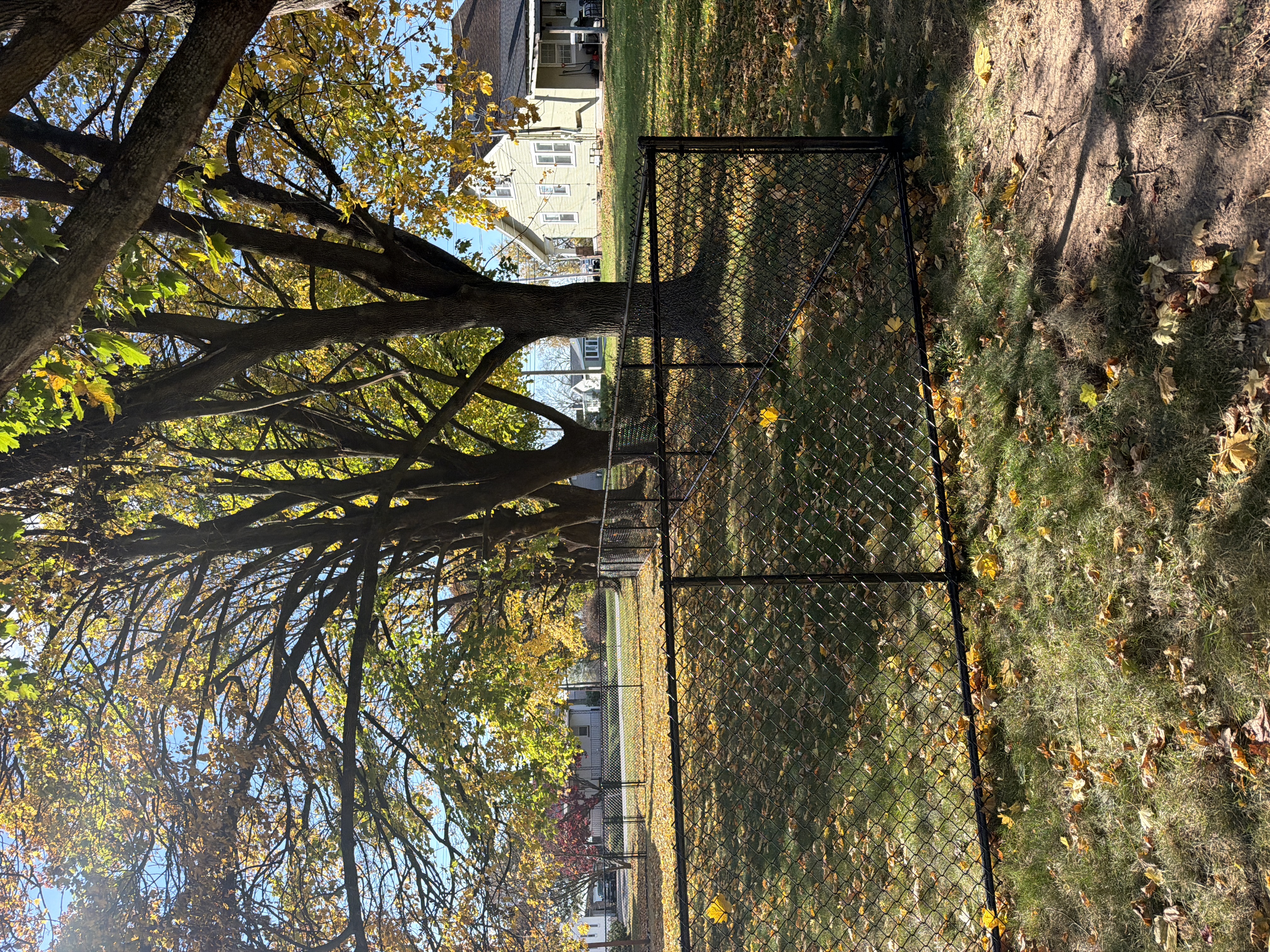
While traditional galvanized wire is functional, black vinyl coated chain link fence options have become the preferred choice for homeowners across Hanover PA and New Oxford PA. The PVC coating adds a protective layer over the steel core, shielding it from moisture, lawn chemicals, and dog urine. This protective jacket prevents rust while leaving no sharp wire ends that could scratch your pet.
Visually, black chain link blends naturally into backyard foliage and landscaping, creating a less intrusive look than bare metal. The dark finish lets your lawn and trees take center stage while still delivering full enclosure security. Choosing quality vinyl coating ensures the fence stays smooth, rust-free, and easy to wash down with a hose whenever dirt or mud accumulates along the bottom.
- Vinyl coating protects underlying steel from rust and animal urine
- Black finish blends into background trees, lawns, and gardens
- Smooth surface protects coats and skin from rough metal edges
- Low maintenance material requires no painting or staining
Dog-Safe Gate Hardware and Latching Systems
A fence is only as secure as its entry points. Standard gravity latches on a fence gate can sometimes be bumped open by energetic dogs or unlatched by clever breeds. Upgrading to self-closing hinges and drop rods ensures gates swing shut securely every time someone enters or exits the yard. A drop rod on double drive gates locks both leaves firmly into the ground to withstand heavy pressure.
Gate placement should also account for how dogs move around your property. Placing walk gates away from high-friction corner runs reduces dog barking at passing traffic while giving quick access to driveway or garden areas. When working with a fence company Hanover PA homeowners rely on, custom gate sizing ensures smooth operation whether you are bringing in a lawnmower or walking your dogs out to the driveway.
- Self-closing hinges prevent gates from being left accidentally open
- Padlock-compatible or child-safe latches prevent accidental releases
- Drop rods anchor double gates tightly against dog pressure
- Proper gate alignment stops bottom sagging where small pets could squeeze out
Want a price for your own yard?
Draw your fence line on a satellite view of your property and see a preliminary price in a few minutes.